
THE BUT-IT'S-FUCKING-AMAZING FALLACY
I have been thinking more on this quote from the Meta and AGI article earlier in the feed:
“But willingness to make enormous bets, and judgment about which enormous bets to make, are very different CEO capabilities.”
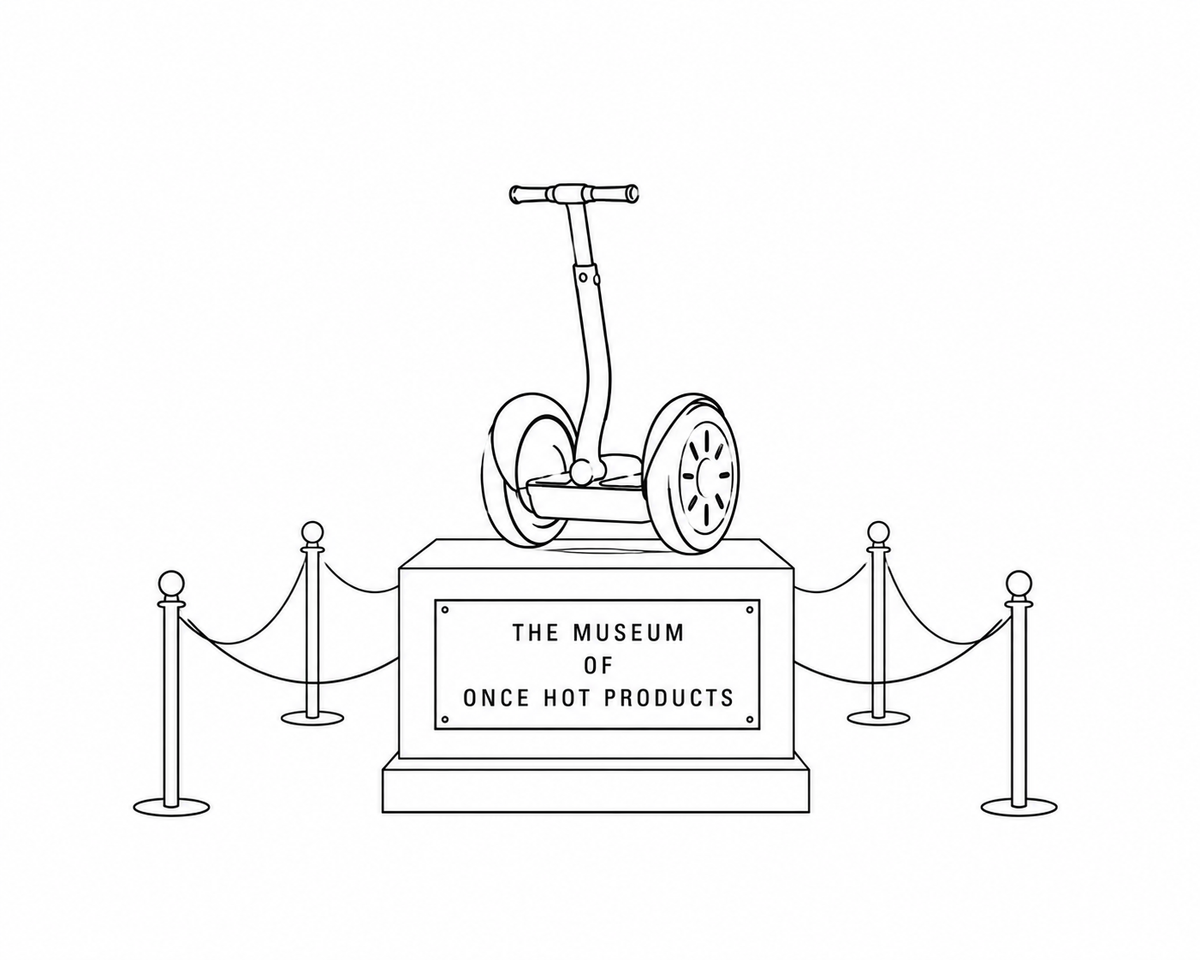
I think there is much to learn from Segway. Back in the early 2000s the inventor of Segway, Dean Kamen, was giving private demos to tech and finance elites. The hype was palpable. Bezos invested, Kleiner Perkins invested with John Doerr suggesting it would be bigger than the internet. Even Steve Jobs, who knew a thing or two about judging products, said it was “as big a deal as the PC”.
Here’s my take: the technology was FUCKING AMAZING (henceforth FA) but breakthrough amazing tech does not necessarily a mass market product make. When Bezos was getting his checkbook out, I suspect he was not considering America’s addiction to cars, sidewalk safety, rain etc.
The moral of the story is even the smartest humans are easily seduced by the FA, and it's easy to lose sight of the big picture when investing in the next big thing. Investors and CEOs don't just need to recognize breakthrough technology, they critically need to recognize when breakthrough technology solves a problem that billions of people actually have.
My pet theory is the same thing happened to Zuckerberg with the metaverse. He demo’d the Oculus Rift headset early on and was blown away by the FA tech. I was lucky enough to demo it around that time, and it was truly staggering. But was it ever going to be a mass market product? Survey says no. Just as the mass market was never going to Segway to the grocery store, so they were never going to strap a computer to their face to live out a not FA second life. However, seduced by the FA, Zuck spent many billions trying to build a business around the technology, and we all know how that is ending.
I’ll go further. Is it possible that having seen ChatGPT, Zuckerberg again saw the FA, and again didn’t sufficiently consider whether it had the potential to truly be a mass market product in the context of Meta? Do people want superintelligent agents inside their social networks, or is that just the next face computer they won't strap to their face?
Disclosure: Have not gone long Meta since the last article. My own writing is putting me off them.
Enjoyed this?
Subscribe to Tanner on Tech for new articles.
Member discussion
0 commentsStart the conversation
Become a member of Tanner on Tech to start commenting.
Subscribe for free